
Why are mirrors coated with silver?

Discover the science behind reflection
Why are mirrors coated with silver?
Mirrors have been everyday objects for centuries. Mirrors are often used to look at yourself, to reflect light, or as a decorative element in your home—they can be found almost everywhere. But have you ever wondered why mirrors reflect so well? And why they’re so often coated with silver? In this blog, we’ll dive into the fascinating world of mirrors and discover why silver plays a central role in how they work.
What exactly is a mirror?
A mirror is, in essence, an object that reflects light in a way that allows you to see an image of what is in front of it. Most modern mirrors consist of a glass plate with a thin, reflective layer of metal behind it. That metal coating largely determines how well the mirror works—and this is where silver comes into play.
Excellent reflective properties
The Role of Silver in Mirrors
Silver is the most reflective metal found in nature. It reflects up to 95% of the visible light that falls on it, making it ideal for use in mirrors. By comparison, aluminum—another metal commonly used in less expensive mirrors—reflects about 85 to 90% of the light. For applications that require the clearest and most accurate image possible, silver is therefore the best choice.
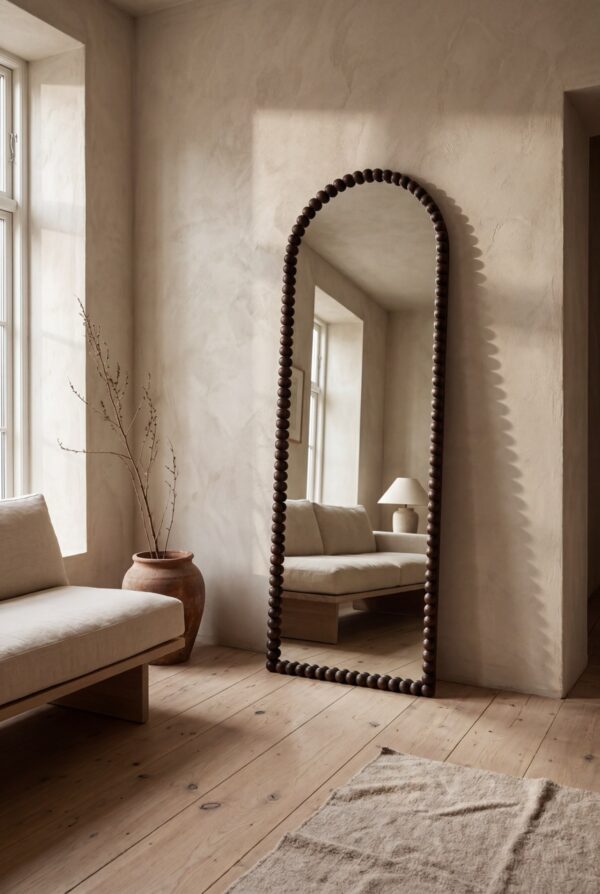
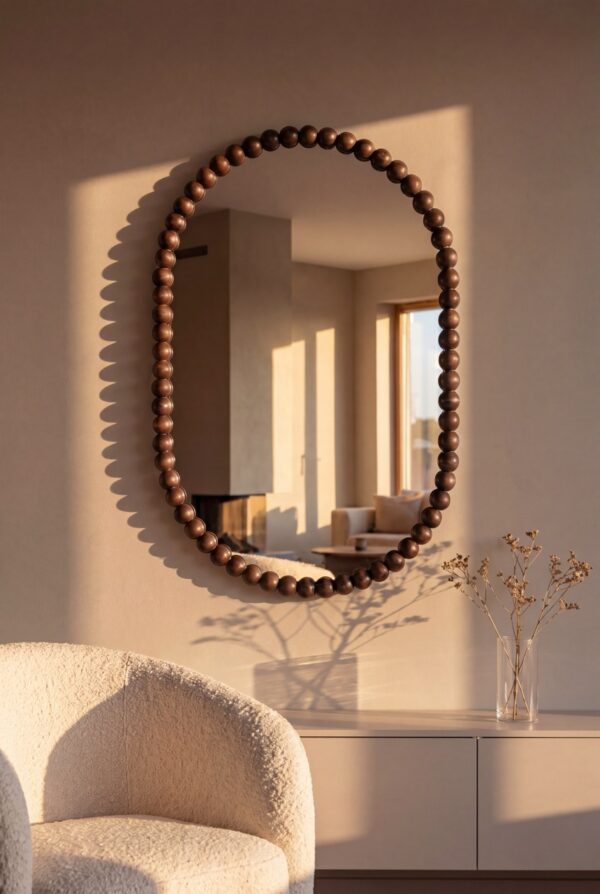
Fun fact: All mirrors in the Nordic Style collection are made with 100% silver mirror glass.
Purity of the image
Because silver reflects light so well, images displayed by silver mirrors are perceived as exceptionally bright and lifelike. This is important in applications where color, detail, and sharpness are essential—such as in optical instruments, scientific equipment, and luxury interiors.
Nordic Style
Check out our mirrors




Why not just glass?
Glass itself is not reflective enough to make a mirror. It mainly allows light to pass through rather than reflect it. The combination of glass and a reflective metal coating—usually applied to the back of the glass pane—creates the mirror effect. The glass protects the silver coating from oxidation, dirt, and damage.
Let's go back in time for a moment
The History of Silver Mirrors
Mirrors have been around for thousands of years. In ancient times, polished metal surfaces such as bronze and copper were used as mirrors. However, these materials reflected much less light and often produced a distorted or dark image.
The use of silver in mirrors began in the 19th century. In 1835, the German chemist Justus von Liebig developed a technique for applying a layer of silver to glass through a chemical process. This method, known as the “silver process,” revolutionized mirror production and forms the basis for many of the mirrors we use today.

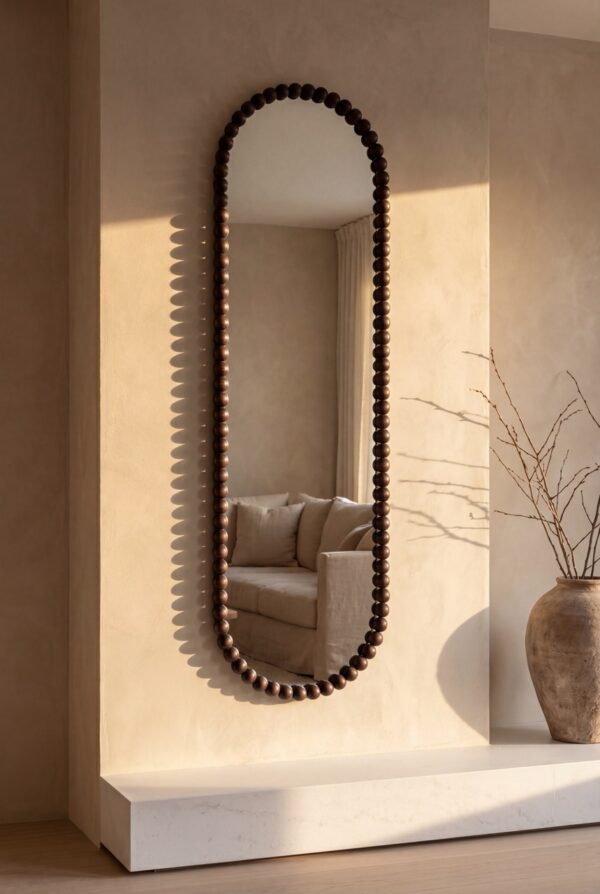
Lara Oval Mirror 125x40 cm
Measuring 125×40 cm, this is an ideal mirror for hanging on the wall.
Check out LaraSilver vs. Other Materials
Although silver has excellent reflective properties, it is not always the most practical choice. Silver is expensive and can oxidize, causing it to lose its luster over time if not properly protected. That is why many commercial mirrors today use less expensive materials, such as aluminum or chrome.
Aluminum is lighter and less expensive than silver, and it oxidizes in a way that has less of an impact on its reflectivity. That is why aluminum is often used in mirrors for bathrooms, vehicles, or industrial applications.
Nevertheless, silver remains the standard for high-quality mirrors—especially in applications where perfect image reproduction is required, such as in telescopes, medical instruments, or luxury design objects.
How are silver mirrors made?
The process usually begins with a clean glass plate that is thoroughly cleaned to remove any dust particles or grease. Next, a silver-containing solution is applied, often through a chemical reduction process in which silver ions bind to the glass surface and precipitate as a thin layer of pure silver.
After the silver layer is applied, a protective coating—such as copper or a layer of varnish—is usually added to prevent oxidation. An additional layer is then applied to protect the entire surface from scratches and moisture, ensuring that the mirror remains durable and usable for many years.
Sustainability and Maintenance
Although mirrors with a silver coating can be susceptible to oxidation, they will last for years if properly maintained. It is important not to clean silver mirrors with harsh cleaning products, as these can damage the protective coating. A soft cloth and a mild cleaning solution are often sufficient to keep the mirror clean and clear.
Conclusion: Silver as an indispensable component in high-quality mirrors
Silver plays a crucial role in the quality of mirrors thanks to its unmatched reflective properties. Although other metals are less expensive and more resistant to corrosion, silver offers the highest image quality and clarity. For applications where precision and perfection are paramount, silver remains the best choice.
So the next time you look in the mirror—say, in your living room—you’ll know that you owe your reflection to a thin layer of one of the most valuable metals on Earth: silver.